Oregon Car Insurance: Three Required Coverages, Explained
Why Oregon's property damage minimum is $20,000, what PIP pays in an at-fault state, how DMV checks your policy and what driving uninsured can cost.
By Brookguard Editorial Team Updated 6 min read
- Liability minimum
- 25/50/20
- Fault system
- At-fault
- Also required
- $15,000 PIP, UM 25/50
- Avg. minimum policy
- $64/mo
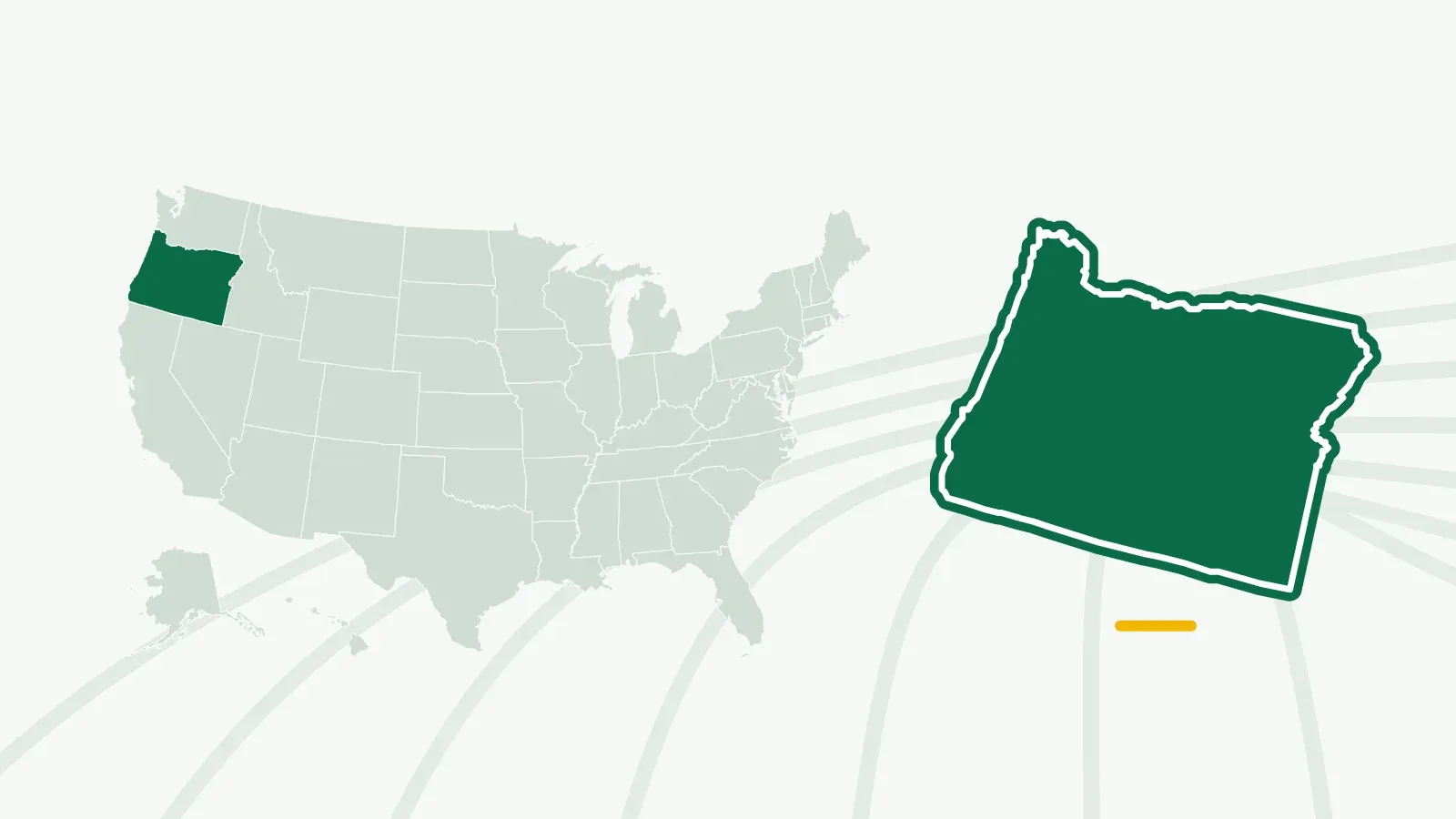
The short version
Oregon requires liability of $25,000 per injured person, $50,000 per crash and $20,000 for property damage, plus $15,000 of personal injury protection and uninsured motorist coverage of $25,000/$50,000. Oregon is still an at-fault state: PIP pays your early costs, and the driver who caused the crash remains responsible for the rest.
What an Oregon policy has to include
Oregon builds three pieces into every legal auto policy. Note the property damage figure: at $20,000 it sits below the $25,000 many other states use.
| Bodily injury liability, per person | $25,000 |
|---|---|
| Bodily injury liability, per crash | $50,000 |
| Property damage liability, per crash | $20,000 |
| Personal injury protection (PIP), per person | $15,000 |
| Uninsured motorist bodily injury | $25,000 per person / $50,000 per crash |
A $20,000 property limit will not cover a newer SUV or a multi-car pileup on I-5. Anything over the limit is yours to pay, so many Oregon drivers raise it along with their injury limits.
PIP in a state that still assigns fault
Oregon requires PIP, yet it is not a no-fault state. Your PIP pays first for your own medical care and some related losses, such as part of your lost wages, without waiting for anyone to decide who caused the crash.
You keep the full right to bring a claim against an at-fault driver for medical costs beyond PIP, other losses and pain and suffering. Learn more in our guide to personal injury protection.
Proving you are insured
Oregon DMV asks for your insurance company and policy number when you register a vehicle or buy a trip permit. Keep your insurance card with you to show an officer at a stop or the other driver after a crash.
Let your policy lapse and the problem rarely stays hidden: a stop, a crash report or your next registration renewal will ask for current coverage. If you are selling a car or storing it, talk to your insurer before you cancel, so you are not driving on a canceled policy.
Consequences of an uninsured drive
- Driving uninsured is a Class B traffic violation under ORS 806.010, with a presumptive fine of $265 and a maximum of $1,000.
- If you are in a crash while uninsured, DMV can suspend your driving privileges.
- To reinstate, you file proof of future responsibility (an SR-22) from an insurer; DMV ends the filing requirement after three years.
- You remain personally liable for the other people's injuries and repairs.
Oregon premiums in 2026
A minimum policy averages about $767 a year, and full coverage about $2,048 a year. Rates run higher in the Portland metro area, where traffic and vehicle theft are more common, and lower in rural counties. Your record, car and deductible also matter.
Winter passes, wildfire seasons and deer on rural roads make comprehensive coverage worth pricing. The coverage calculator suggests limits that fit what you own.
Common questions
Why is Oregon's property damage minimum only $20,000?
That is the amount set by Oregon's financial responsibility law. It is a legal floor, not a recommendation; a single newer vehicle can cost more than that to replace.
Does Oregon PIP mean I can't sue the other driver?
No. Oregon remains an at-fault state. PIP pays your first costs, and you can still claim against the driver who caused the crash.
What fine will I face for no insurance in Oregon?
The presumptive fine for a Class B traffic violation is $265, and a court can impose up to $1,000. A crash while uninsured can also cost you your license.
Sources
- Oregon DMV — Insurance requirements
- ORS 806.010 — Driving uninsured
- ORS 806.245 — Ending the future responsibility filing requirement
- CarInsurance.com — Average car insurance rates by state (2026)
Facts on this page were checked against these sources on October 12, 2026. Fine amounts are the state's presumptive figures; your court may add costs or set a different amount.
Keep reading
-
Coverage
Personal injury protection
Pays your medical bills and lost income regardless of fault. Required in 12 no-fault states and a few others.
-
Coverage
Uninsured motorist coverage
Pays your injury costs when an uninsured, underinsured or hit-and-run driver is at fault. Required in many states.
-
State
Washington
25/50/10 liability; PIP and UIM must be offered and rejected in writing; $550+ ticket.