Personal Injury Protection: Your Own Medical Coverage After a Crash
What PIP pays for, the states where it's mandatory, how no-fault rules limit when you can sue, and the deadlines that can cost you benefits.
By Brookguard Editorial Team Updated 7 min read
- Pays
- Your own injury costs
- Fault
- Doesn't matter
- No-fault states
- 12 (plus Puerto Rico)
- Covers car damage?
- No
The short version
Personal injury protection (PIP) pays medical bills, part of your lost income and related costs for you and your passengers after a crash, regardless of who was at fault. It's the core of the twelve no-fault states, where you claim from your own insurer first and can sue the other driver only for more serious injuries. A few at-fault states also require or include it.
What PIP actually pays
PIP is first-party coverage: it pays you and the people in your car directly, without anyone having to prove fault first. Exact benefits are set by each state's law and your policy, but most PIP plans pay toward some mix of these costs.
Medical care
Ambulance, emergency room, doctor visits, surgery, prescriptions, physical therapy and other reasonable treatment for crash injuries.
Lost income
A share of the wages you lose while you can't work. Florida, for example, pays 60% of lost income within the policy limit.
Help at home
In many states, money for tasks you can't do while injured, such as child care, cleaning or getting to appointments.
Funeral and survivor benefits
A set amount if a crash is fatal. Florida's law includes a $5,000 death benefit per person, on top of the other benefits.
PIP never pays to fix a car. Damage to your vehicle runs through collision coverage or the other driver's property damage liability.
Where PIP is required
Twelve states plus Puerto Rico have no-fault laws built around PIP: Florida, Hawaii, Kansas, Kentucky, Massachusetts, Michigan, Minnesota, New Jersey, New York, North Dakota, Pennsylvania and Utah. Some at-fault states, including Delaware, Maryland and Oregon, also require PIP, though Maryland lets you sign a written waiver that limits it. In Texas, every auto policy includes PIP unless you reject it in writing.
| Florida | $10,000 minimum; pays 80% of medical costs and 60% of lost income; $5,000 death benefit |
|---|---|
| New York | $50,000 per person in basic economic loss, including lost earnings up to $2,000 a month for up to three years |
| Michigan | You choose a medical level: unlimited (the default), $500,000, $250,000, or lower options if you have qualifying health coverage, Medicaid or Medicare |
Every no-fault state sets its own minimum and its own list of benefits, so check your state's page, such as Florida or New York, before you choose amounts.
How no-fault limits lawsuits
In exchange for fast payment from your own policy, no-fault states restrict when you can sue the at-fault driver for pain and suffering. You still keep the right to sue once an injury crosses the state's threshold. In most no-fault states, claims for damage to your car aren't limited this way, though Michigan has its own, narrower rules for vehicle damage. Thresholds come in two kinds.
Verbal threshold
The injury must meet a legal description, such as a fracture, significant disfigurement, permanent loss of a body function or death. Florida, Michigan, New Jersey, New York and Pennsylvania use this approach.
Monetary threshold
You may sue once your medical expenses pass a set dollar amount. Hawaii, Kansas, Kentucky, Massachusetts, Minnesota, North Dakota and Utah use this approach.
Deadlines that can cost you benefits
PIP claims have their own clocks, and missing them can reduce or wipe out what you collect. Two examples show how strict they can be.
- Florida: to use PIP medical benefits, you must get initial treatment within 14 days of the crash. If a qualified provider decides you did not have an emergency medical condition, medical benefits are capped at $2,500.
- New York: the no-fault application generally must reach the insurer within 30 days of the accident if your first notice wasn't in writing, and medical bills are usually due within 45 days of treatment.
- 1 Get checked by a doctor promptly, even if you feel fine at the scene.
- 2 Tell your own insurer about the crash the same day or as soon as you can.
- 3 Ask for the PIP claim forms and the deadlines that apply in your state.
- 4 Keep every medical bill, pay stub and receipt for out-of-pocket costs.
PIP compared with MedPay
Medical payments coverage, or MedPay, also pays injury costs regardless of fault, and it's sold in many at-fault states. It's narrower than PIP.
| Medical bills | PIP: yes. MedPay: yes |
|---|---|
| Funeral costs | PIP: yes. MedPay: yes |
| Lost income | PIP: yes. MedPay: no |
| Household help | PIP: often. MedPay: no |
| Where you'll find it | PIP: no-fault states and a few others. MedPay: mostly at-fault states, as an option |
Choosing your PIP amount
Where your state lets you pick, the right PIP level depends on what your health plan already covers and how long you could go without a paycheck. Health insurance may cover medical bills but not lost income, and many health plans have high deductibles.
Some insurers let you add extra PIP or a deductible to lower the premium. Florida, for instance, requires insurers to offer PIP deductibles of $250, $500 and $1,000. Our coverage calculator can help you size the rest of your policy around it.
Common questions
Does my PIP cover passengers in my car?
Generally yes. Passengers who don't have their own auto policy are usually covered by the PIP on the car they were riding in; those with their own policy may claim on it first, depending on the state.
Am I covered by PIP if a car hits me while I'm walking?
In many no-fault states, your own PIP covers you as a pedestrian or cyclist struck by a car. Rules vary, so check the definitions in your policy.
If I have good health insurance, do I still need PIP?
In states that require it, yes, regardless of your health plan. Elsewhere it can still help, because it pays lost income and deductibles that health insurance doesn't.
Can I sue the other driver if I live in a no-fault state?
Yes. You can sue for pain and suffering once your injury meets the state's verbal or monetary threshold, and in most no-fault states you can claim vehicle damage from the at-fault driver without meeting any threshold.
Sources
- Insurance Information Institute — Background on: No-fault auto insurance
- Florida Statutes § 627.736 — Required personal injury protection benefits
- New York Insurance Law § 5102 — Definitions (basic economic loss, serious injury)
- Michigan Department of Insurance and Financial Services — Choosing PIP medical coverage
Facts on this page were checked against these sources on October 12, 2026. No-fault benefits and deadlines are set by each state, so confirm your own state's rules before a claim.
Keep reading
-
State
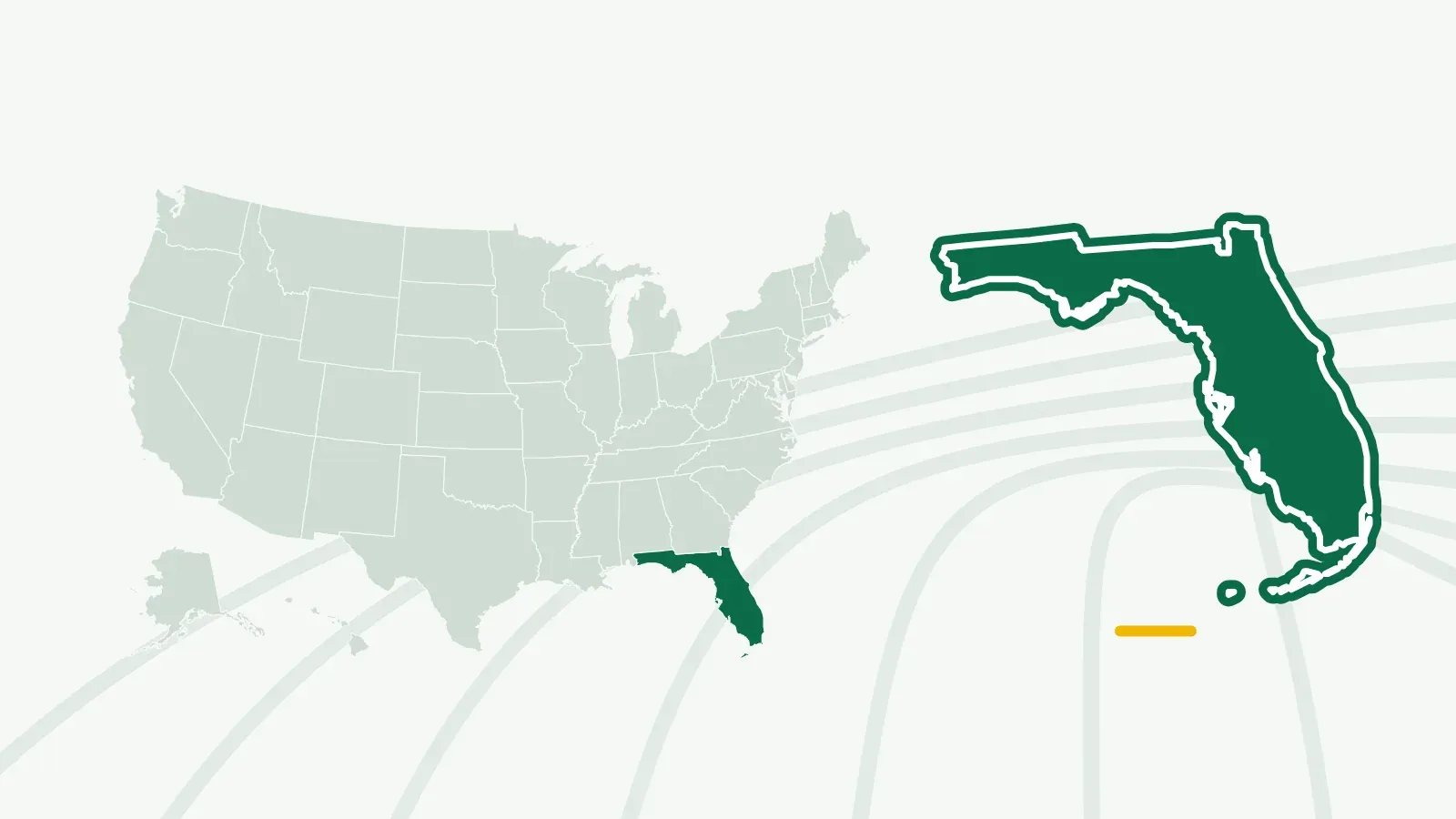
Florida
$10,000 PIP and $10,000 PDL required, 14-day treatment rule, up to 3-year suspension for a lapse.
-
State
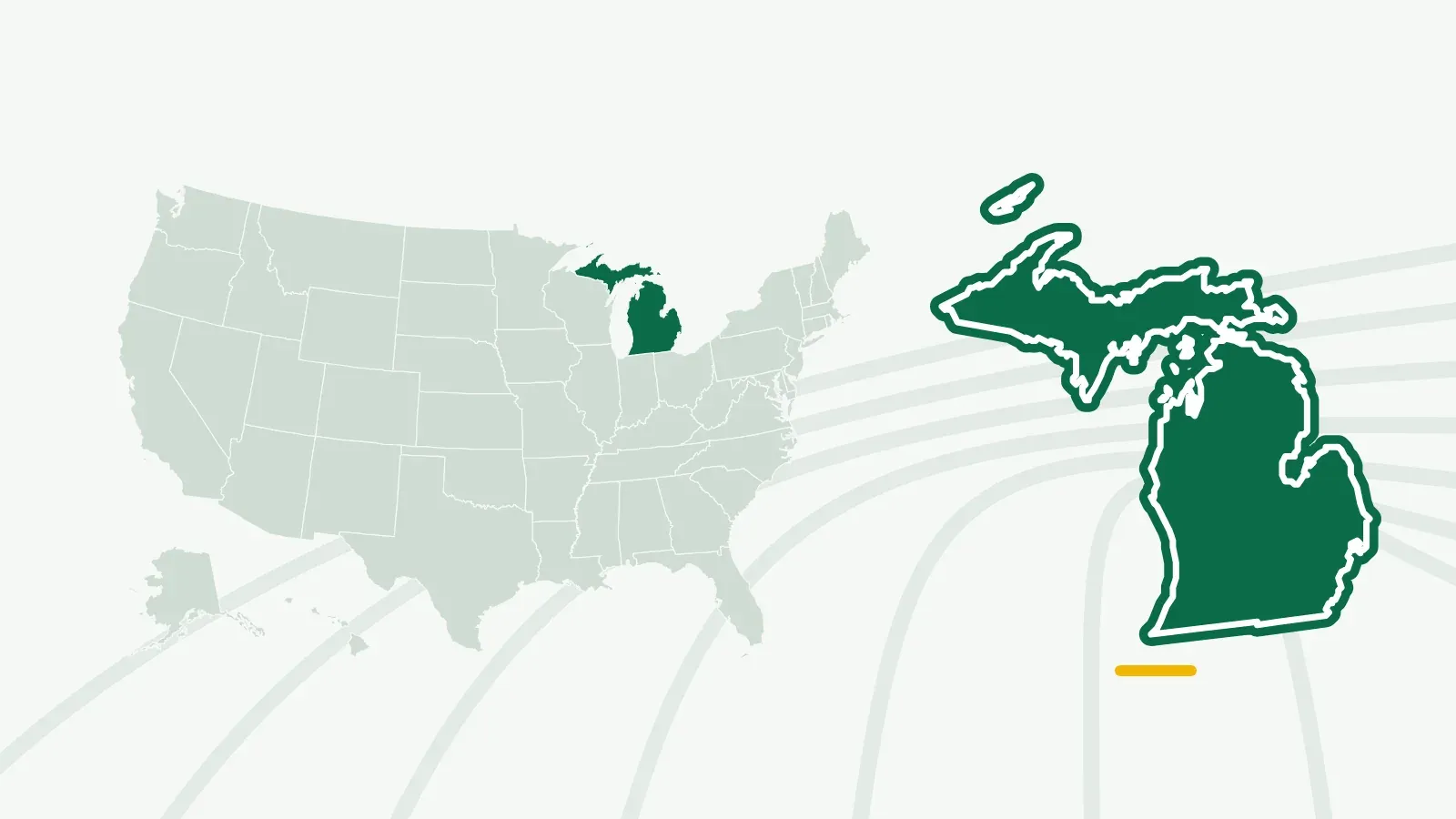
Michigan
250/500 default liability (50/100/10 by form), PIP level you choose, $1 million PPI.
-
Coverage
Uninsured motorist coverage
Pays your injury costs when an uninsured, underinsured or hit-and-run driver is at fault. Required in many states.