Hawaii Car Insurance After the 2026 Increase
The higher liability floor, the PIP every policy carries, the $5,000 line that opens the door to a lawsuit, and what happens if you drive uninsured.
By Brookguard Editorial Team Updated 6 min read
- Liability minimum
- 40/80/20
- Fault system
- No-fault
- Required PIP
- $10,000
- Avg. minimum policy
- $40/mo
The short version
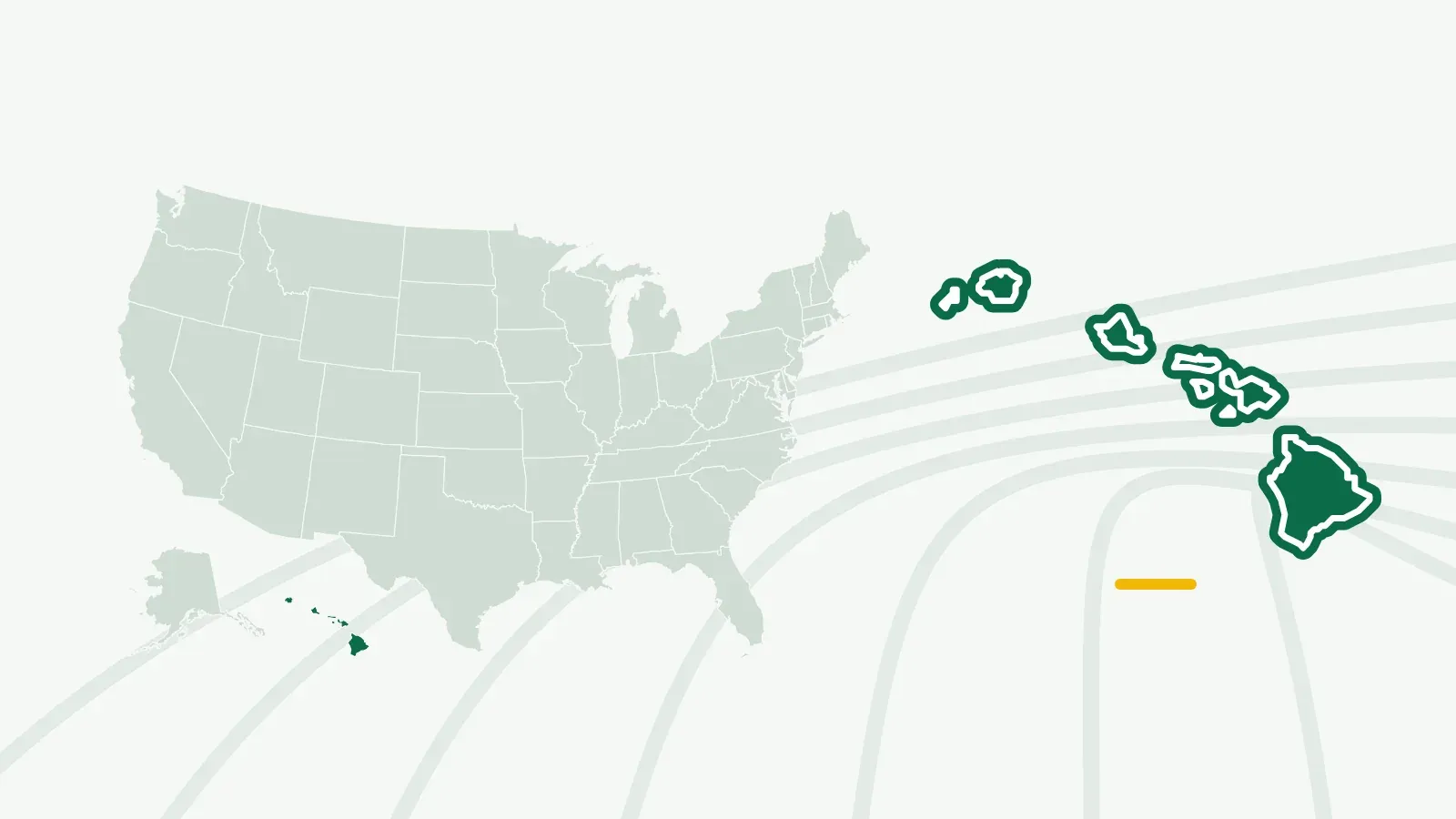
For new and renewal policies starting on or after January 1, 2026, Hawaii requires liability of at least $40,000 per person, $80,000 per crash and $20,000 for property damage. Every policy also carries $10,000 of personal injury protection, which pays your own medical bills whoever caused the crash.
Hawaii's higher liability floor
Hawaii's old minimum of 20/40/10 dated back to the late 1990s. The state doubled it, and the new limits apply to any policy that starts or renews on or after January 1, 2026. If your renewal came after that date, your insurer should already show the new figures on your declarations page.
| Bodily injury liability, per person | $40,000 |
|---|---|
| Bodily injury liability, per crash | $80,000 |
| Property damage liability, per crash | $20,000 |
| Personal injury protection (PIP), per person | $10,000 |
The liability lines pay other people when you're at fault. PIP is the line that pays you. Read more about how personal injury protection works.
How no-fault works on the islands
After a crash, you and your passengers turn first to your own PIP for medical and rehabilitation costs, up to the policy limit. Fault doesn't decide who pays those first bills. In exchange, the right to sue the other driver for pain and suffering is limited.
You can step outside the no-fault system when a crash causes:
- a death;
- a significant permanent loss of use of a part or function of the body;
- permanent and serious disfigurement that causes mental or emotional suffering;
- PIP benefits incurred of $5,000 or more.
Damage to cars and other property stays on the at-fault side. The driver who causes the crash pays through their property damage liability.
Optional protection insurers must offer
Uninsured motorist (UM)
Covers your injuries when the at-fault driver has no insurance. Your insurer has to offer it, and you can turn it down only in writing.
Underinsured motorist (UIM)
Steps in when the other driver's limits run out before your losses do. It's offered the same way, with a written rejection if you don't want it.
Think about how high your medical bills could run after a serious crash, then weigh the modest cost of UM and UIM against that number.
Proof in the car and what a violation costs
Keep a current Hawaii insurance identification card in the vehicle whenever you drive. You can be ticketed for not having it. If a car is uninsured, the owner must turn in the registration and plates to the county and stop driving it.
| Fine, first offense | $500 (the court may allow community service instead) |
|---|---|
| Fine, repeat offense within five years | At least $1,500, up to $5,000 |
| License, first conviction | Suspended for three months, or a six-month prepaid nonrefundable policy |
| License, repeat within five years | Suspended for one year, or a six-month prepaid nonrefundable policy |
| Jail | Up to 30 days for repeat convictions within five years |
A court can reduce the fine if you show a current policy, but the cost of a crash while uninsured stays with you.
What Hawaii drivers pay
Statewide averages in 2026 are about $475 a year for a minimum policy and about $1,757 a year for full coverage with 100/300/100 limits. Island, ZIP code, driving record and the value of your car shape your own rate, and the higher 2026 limits may raise renewals for drivers who carried the old minimum.
The coverage calculator can help you pick limits before you request quotes.
Common questions
When did Hawaii's 40/80/20 minimum take effect?
It applies to new and renewal policies with effective dates on or after January 1, 2026. Older policies moved to the new limits at their next renewal.
Who pays my hospital bill after a crash in Hawaii?
Your own PIP pays first, up to at least $10,000, no matter who caused the crash. Costs beyond that may go to health insurance or, if a lawsuit threshold is met, the at-fault driver.
When can I sue the other driver in Hawaii?
When the crash causes death, a significant permanent loss of use, serious permanent disfigurement, or PIP benefits of $5,000 or more.
Do I have to buy uninsured motorist coverage in Hawaii?
No. Insurers must offer UM and UIM, but you can decline them in writing.
Sources
- Hawaii Insurance Division — Auto minimum limits FAQs (2026 change)
- Hawaii Insurance Division — Motor vehicle insurance information
- Hawaii Revised Statutes § 431:10C-117 (penalties)
- CarInsurance.com — Average car insurance rates by state (2026)
Facts on this page were checked against these sources on October 12, 2026. Some state pages still show the pre-2026 limits, so rely on the Insurance Division's 2026 FAQ for the current minimum.
Keep reading
-

Coverage
Personal injury protection
Pays your medical bills and lost income regardless of fault. Required in 12 no-fault states and a few others.
-
Coverage
Uninsured motorist coverage
Pays your injury costs when an uninsured, underinsured or hit-and-run driver is at fault. Required in many states.
-

Guide
Choose the right coverage
Build a policy in order: state minimums, liability that fits your assets, your car, your injuries.