Vermont Car Insurance: What You Must Carry
A modest liability floor, an unusually strong uninsured motorist requirement, and how Vermont treats a missing card versus a missing policy.
By Brookguard Editorial Team Updated 5 min read
- Liability minimum
- 25/50/10
- Fault system
- At-fault
- Required UM/UIM
- 50/100/10
- Avg. minimum policy
- $30/mo
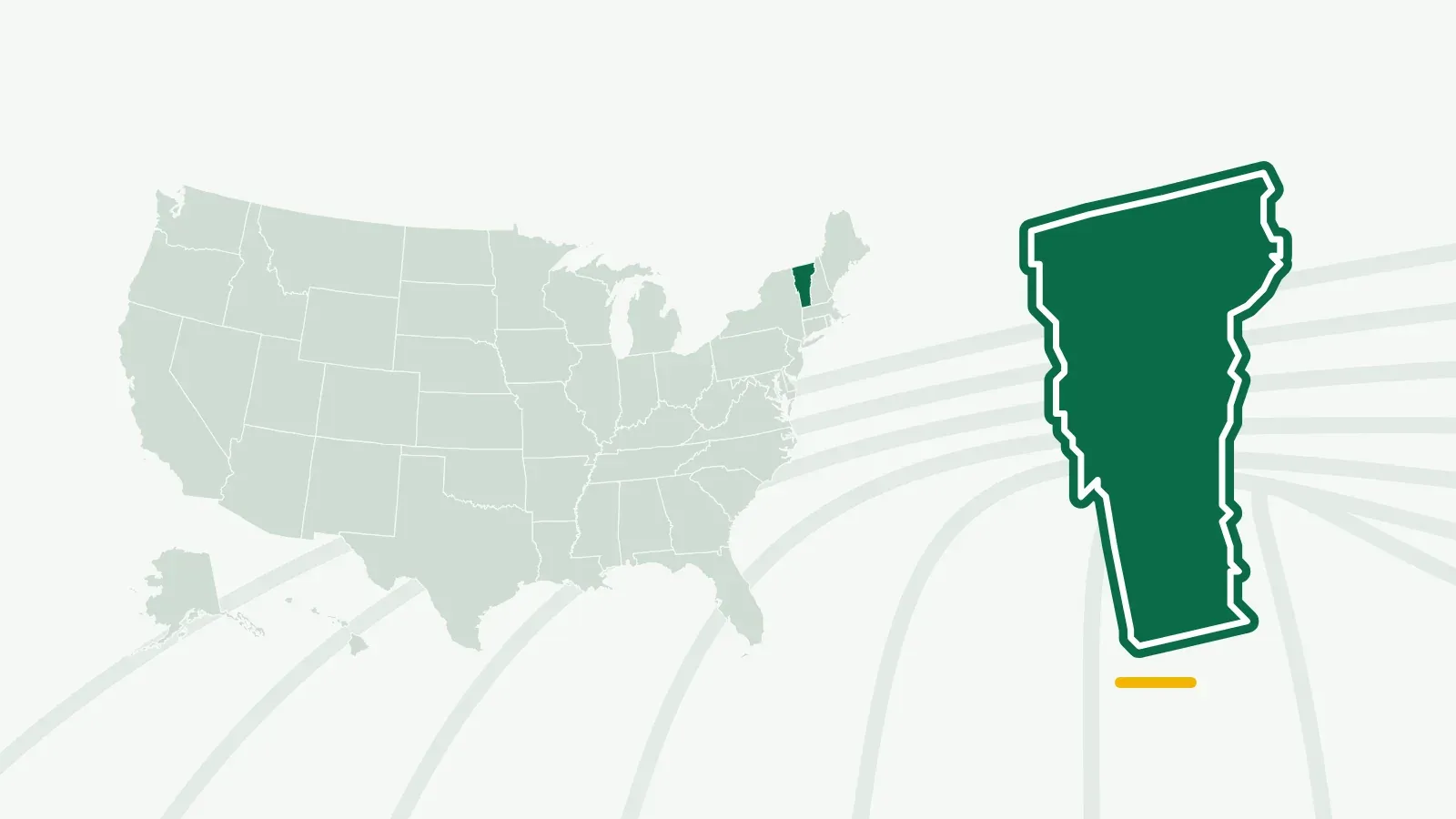
The short version
Vermont requires liability coverage of at least $25,000 per injured person, $50,000 per crash and $10,000 for property damage. Every policy must also carry uninsured/underinsured motorist coverage of at least $50,000/$100,000 for injuries and $10,000 for property, which is higher than the liability floor itself.
Vermont's required coverage at a glance
Vermont is an at-fault state. The driver who caused the crash, through their insurer, pays the other side's losses. What stands out is the protection the state makes you buy for yourself.
| Liability: injury to one person | $25,000 |
|---|---|
| Liability: injuries to two or more people | $50,000 |
| Liability: property damage | $10,000 |
| UM/UIM: injury to one person | $50,000 |
| UM/UIM: injuries to two or more people | $100,000 |
| UM/UIM: property damage | $10,000 ($150 deductible) |
If you buy liability limits above 50/100, your uninsured motorist limits rise to match unless you ask for less. The $150 deductible on uninsured property damage does not apply if you have other coverage for that damage, such as collision.
Why the $10,000 property limit is the weak spot
Ten thousand dollars covers a fender-bender. It does not cover a late-model SUV, a guardrail and a utility pole. If you cause more damage than your limit, the owner can come after you for the rest.
The same applies to injuries. A $25,000 per-person limit can disappear after one ambulance ride, imaging and a short hospital stay. The legal floor is a starting point, not a measure of what a serious crash costs.
Proof of insurance in the car
You must have proof of coverage with you whenever you drive. Vermont law accepts it on a phone or other device, and showing your screen does not give an officer permission to browse the rest of it.
Forgot the card? If you send or bring in proof that you were insured on the day of the stop within seven business days, you will not be convicted. The DMV can also require proof before a vehicle inspection.
Penalties for driving uninsured
Vermont treats these as civil traffic violations, not crimes. There are two separate offenses:
- No insurance at all: a civil penalty of up to $500, plus points on your driving record.
- Insured but no proof in the car: a civil penalty of up to $100.
- Many violations, crashes and suspensions lead to an SR-22 filing, which must stay on file with the DMV for at least three years.
- Any lapse during that SR-22 period, such as a cancellation or non-renewal, suspends your license until coverage is back on file.
If you cause a crash while uninsured, the other people's medical bills and repairs fall on you directly.
What coverage costs in Vermont
Vermont is among the least expensive states. The 2026 averages are about $365 a year for a minimum policy and about $1,660 a year for full coverage. Rural mileage, your town and your driving history shape your own quote.
Deer strikes and long icy winters make comprehensive and collision coverage worth considering, even on a car that is paid off.
Common questions
Why is Vermont's uninsured motorist minimum higher than its liability minimum?
State law sets UM/UIM at 50/100/10 regardless of your liability limits, so your own protection against an uninsured driver starts above what you owe others.
Can I show my Vermont insurance card on my phone?
Yes. Electronic proof on a phone or other device is accepted at traffic stops.
How long does a Vermont SR-22 last?
The DMV requires it to stay on file for at least three years. If it lapses during that time, your license is suspended until valid coverage is filed again.
Sources
- Vermont Statutes, 23 V.S.A. § 800 (maintenance of financial responsibility)
- Vermont Statutes, 23 V.S.A. § 941 (uninsured motorist coverage)
- Vermont Department of Motor Vehicles — Insurance requirements and SR-22
- CarInsurance.com — Average car insurance rates by state (2026)
Facts on this page were checked against these sources on October 12, 2026. Vermont's penalties are maximums set by statute; the actual amount on a ticket can be lower.
Keep reading
-
Coverage
Uninsured motorist coverage
Pays your injury costs when an uninsured, underinsured or hit-and-run driver is at fault. Required in many states.
-
Coverage
Liability insurance
Pays others for injuries and damage you cause. Required in 49 states and D.C.; minimums vary by state.
-

Guide
Choose the right coverage
Build a policy in order: state minimums, liability that fits your assets, your car, your injuries.