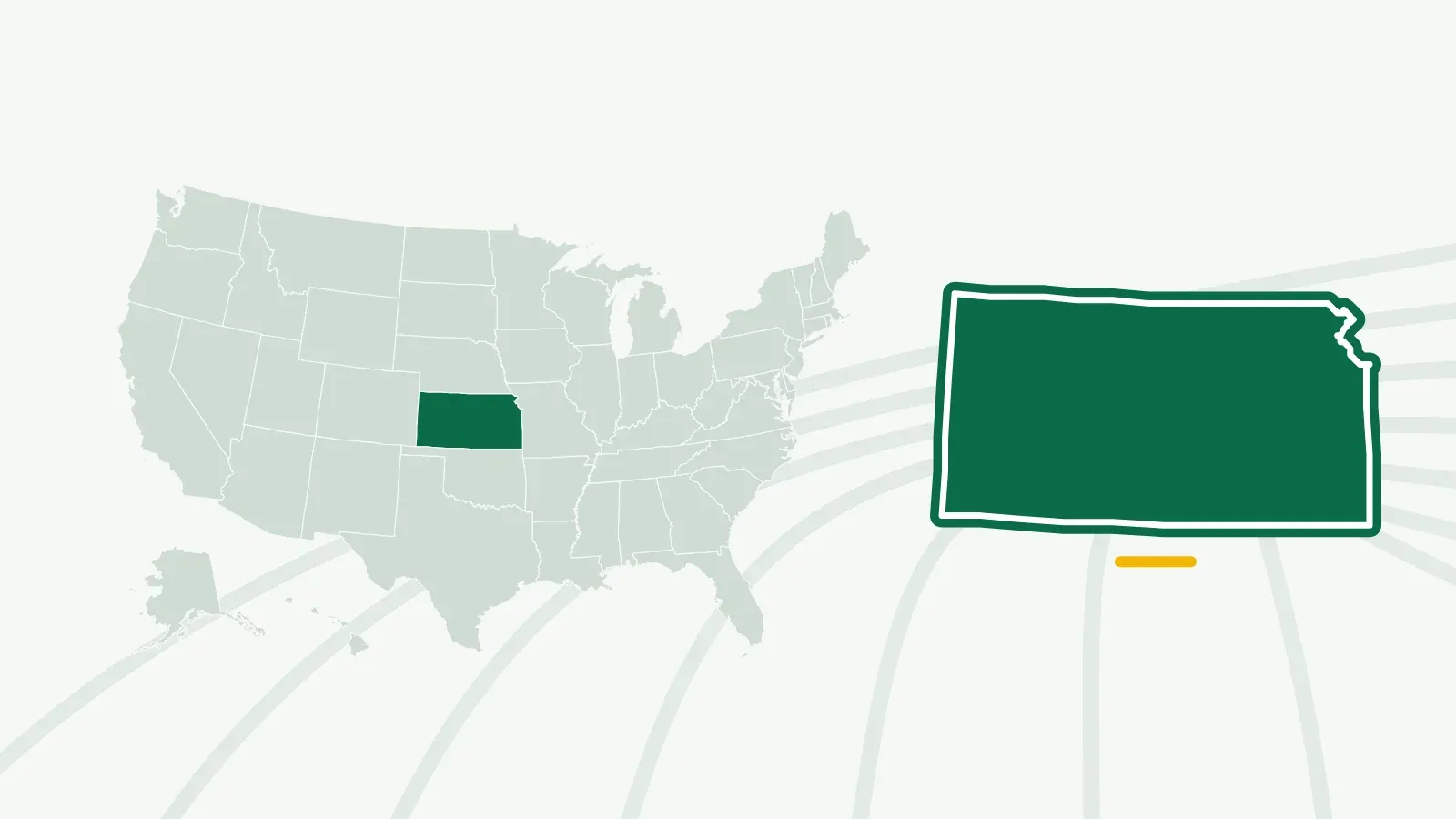
Kansas Car Insurance: Three Required Coverages
Liability, personal injury protection and uninsured motorist coverage all come standard in Kansas. Here's what each pays and when you can sue after a crash.
By Brookguard Editorial Team Updated 7 min read
- Liability minimum
- 25/50/25
- Fault system
- No-fault
- Also required
- PIP and UM/UIM
- Avg. minimum policy
- $51/mo
The short version
Kansas policies must include liability of at least $25,000 per person, $50,000 per crash and $25,000 for property damage, personal injury protection with at least $4,500 for medical costs, and uninsured motorist coverage. Because Kansas is a no-fault state, you can sue for pain and suffering only after medical treatment worth $2,000 or more or a serious injury.
The coverages Kansas law requires
A Kansas policy has three required parts. Liability pays others when you cause a crash. PIP pays you and your passengers regardless of fault. Uninsured motorist coverage pays you when the other driver can't.
| Bodily injury liability, per person | $25,000 |
|---|---|
| Bodily injury liability, per crash | $50,000 |
| Property damage liability | $25,000 |
| Uninsured/underinsured motorist | $25,000 per person / $50,000 per crash |
| Personal injury protection | See the benefit list below |
UM coverage normally matches your bodily injury limits. You can reject the part above the state minimum in writing, but not the minimum itself. Every UM policy in Kansas also carries an underinsured provision.
What Kansas PIP pays
PIP covers you, relatives in your household, passengers and pedestrians your car hits. These are the minimum benefits per person:
- Medical care: at least $4,500.
- Lost income: up to at least $900 a month for up to one year.
- Help at home: up to $25 a day for up to 365 days for services you can no longer do yourself.
- Rehabilitation: at least $4,500.
- Funeral: up to $2,000.
- Survivors: up to at least $900 a month in lost support, generally for up to a year.
Our page on personal injury protection explains how PIP claims are filed and paid.
When a Kansas crash can go to court
No-fault limits lawsuits for pain and suffering. In Kansas you can bring one when any of these apply:
- medical treatment with a reasonable value of $2,000 or more;
- permanent disfigurement;
- a fracture to a weight-bearing bone, or a compound, comminuted, displaced or compressed fracture;
- loss of a body member, permanent injury or permanent loss of a bodily function;
- death.
Vehicle damage isn't part of no-fault. The at-fault driver's property damage liability pays for it.
Proof of coverage and penalties
Show proof when an officer asks. A card or policy works, and so does an image on your phone; the officer may look only at the proof. If you're cited but bring valid proof to court within 10 days, you generally won't be convicted.
| First offense | Class B misdemeanor: $300 to $1,000 fine, up to six months in jail, or both |
|---|---|
| Another offense within three years | Class A misdemeanor: $800 to $2,500 fine |
| After an uninsured crash | License and registration suspended until you file proof of coverage |
| Reinstatement fee | $100, or $300 if revoked again within a year |
Typical Kansas premiums
The 2026 statewide average is about $616 a year for a minimum policy and about $2,496 a year for full coverage with 100/300/100 limits. Kansas sits in hail country, so comprehensive claims are common, and your location, record and car shape your own price.
A higher comprehensive deductible can bring the premium down if you can handle the out-of-pocket cost; the full coverage calculator helps you test options.
Common questions
What does no-fault mean for a Kansas driver?
Your own PIP pays your medical bills and lost income first, whoever caused the crash. You can sue the other driver for pain and suffering only after crossing the injury threshold.
How much medical treatment lets me sue in Kansas?
Treatment with a reasonable value of $2,000 or more, or a serious injury such as a fracture, permanent injury or disfigurement.
Can I decline uninsured motorist coverage in Kansas?
Only the portion above the state minimum. The 25/50 minimum UM coverage stays on every policy.
What fee does Kansas charge to reinstate after an insurance suspension?
$100 in most cases, or $300 if the registration was revoked again within a year.
Sources
- K.S.A. 40-3103 (PIP benefit definitions), Kansas Legislature
- K.S.A. 40-3104 (proof of insurance and penalties), Kansas Legislature
- K.S.A. 40-3117 (lawsuit threshold), Kansas Legislature
- CarInsurance.com — Average car insurance rates by state (2026)
Facts on this page were checked against these sources on October 12, 2026. The Kansas Insurance Department can answer questions about a specific policy.
Keep reading
-
Coverage
Personal injury protection
Pays your medical bills and lost income regardless of fault. Required in 12 no-fault states and a few others.
-
Coverage
Uninsured motorist coverage
Pays your injury costs when an uninsured, underinsured or hit-and-run driver is at fault. Required in many states.
-
State
Missouri
25/50/25 liability, required 25/50 uninsured motorist, MOIVS checks, 4 points for no insurance.