Connecticut Car Insurance: Liability, UM and the DMV's Lapse Rules
The two coverages every Connecticut policy needs, how the DMV learns about a lapse, the $200 civil penalty and suspensions that follow, and what drivers pay.
By Brookguard Editorial Team Updated 6 min read
- Liability minimum
- 25/50/25
- Fault system
- At-fault
- Also required
- UM/UIM 25/50
- Avg. minimum policy
- $93/mo
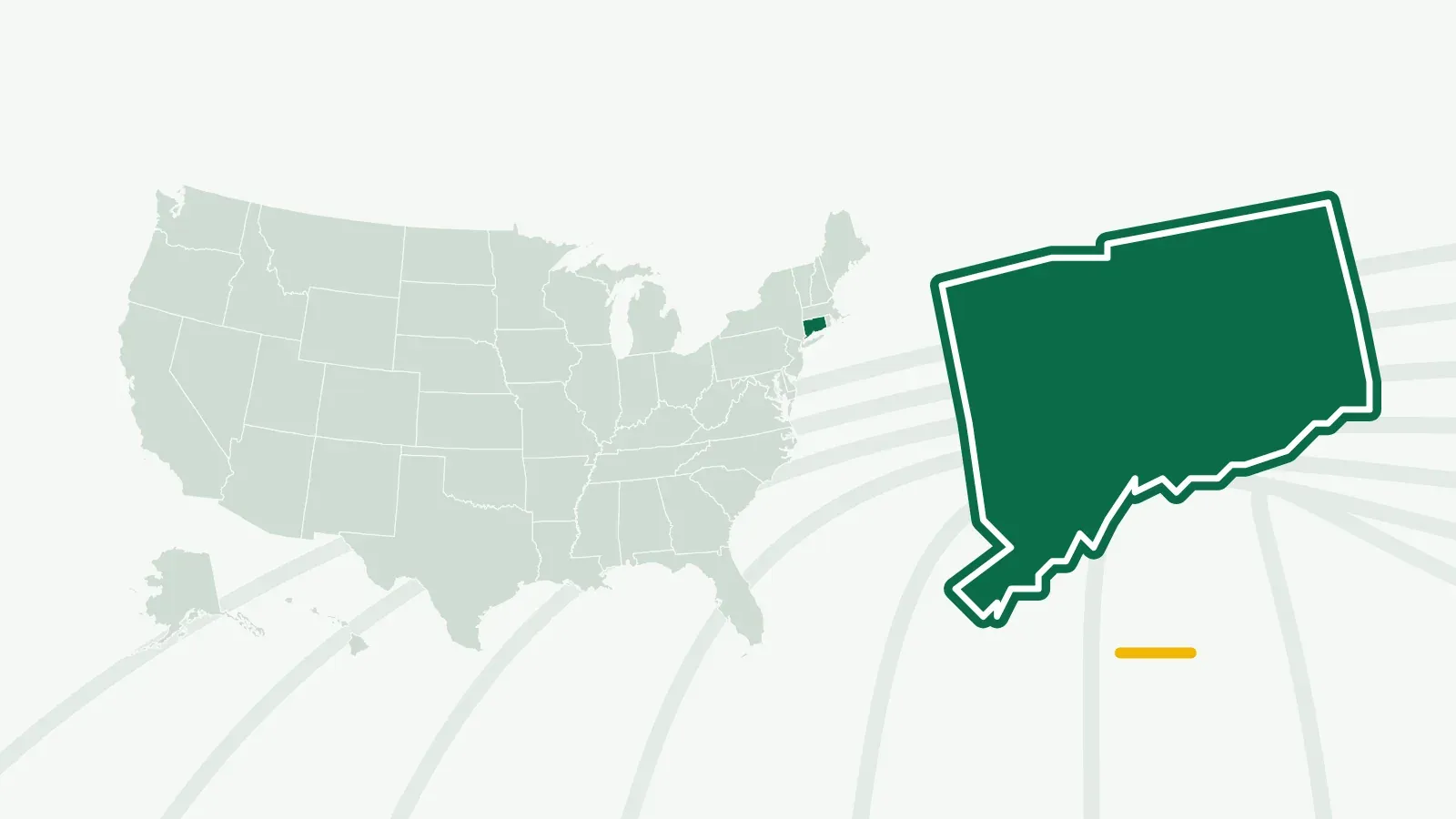
The short version
Connecticut requires liability insurance of at least $25,000 for each injured person and $50,000 for each crash, plus $25,000 for property damage, and uninsured/underinsured motorist coverage of at least $25,000/$50,000. Insurers tell the DMV when a policy ends; a lapse of more than 14 days brings a $200 civil penalty and a registration suspension. Driving uninsured can also mean a fine of $100 to $1,000.
Two coverages Connecticut makes mandatory
In Connecticut, fault decides who pays. If you cause a collision, your liability insurer covers the other people's injuries and damage up to your limits, and you can be sued for anything above them. Connecticut is also one of the states that makes you protect yourself against drivers who have little or no insurance.
| Bodily injury liability, per person | $25,000 |
|---|---|
| Bodily injury liability, per accident | $50,000 |
| Property damage liability, per accident | $25,000 |
| Uninsured/underinsured motorist, per person / per accident | $25,000 / $50,000 |
Your UM/UIM limit can't drop below the bodily injury minimums. It pays for your injuries, and your passengers', when the at-fault driver is uninsured, underinsured or unidentified. Our UM/UIM guide explains how claims work.
How the DMV catches a lapse
A Connecticut registration needs continuous liability coverage until you cancel the registration or turn in the plates. Insurers report cancellations to the DMV, and the agency follows up on its own.
- 1 The DMV may send a warning letter when a registered vehicle shows no insurance.
- 2 If coverage has been off for more than 14 days, a suspension notice follows.
- 3 Each lapse carries a $200 uninsured motorist civil penalty, which can be rescinded if you prove continuous coverage.
- 4 Your registration is suspended, and you can't register or renew any vehicle in your name until it's resolved.
To clear it, pay the $200 and send proof: a declarations page, a letter of experience or a permanent Connecticut ID card. Temporary cards, bills and binders aren't accepted. If you think the DMV is wrong, ask for a hearing before the suspension date.
Proof of insurance at a stop
You can show your insurance ID card on your phone; Connecticut has accepted electronic cards since October 1, 2018. Police can also check coverage through the state's online insurance verification system, so an expired paper card won't hide a canceled policy.
Planning to store a car or move away? Cancel the Connecticut registration or return the plates before you end the policy. Dropping insurance first is what triggers most lapse notices, even for cars that never left the driveway. If you sell a car, keep the plate receipt from the DMV; it's your record that the registration ended.
Penalties for driving without insurance
- A court fine of $100 to $1,000.
- Suspension of your registration and license for one month after a first conviction.
- A six-month suspension after a second or later conviction.
- Your license stays suspended until you show proof of the required coverage.
- Owners of commercially registered vehicles who knowingly skip insurance face a class D felony.
These court penalties are separate from the DMV's $200 civil penalty for a lapse, so one uninsured period can cost you twice. The largest cost usually comes later: if you cause a crash with no policy, the injured people can pursue you personally for medical bills, lost wages and repairs, and insurers tend to charge more once your record shows a gap.
Average premiums in Connecticut
A minimum policy averaged about $1,112 a year in 2026, and full coverage averaged about $2,742 a year. Required UM coverage is part of why the minimum costs more here than in many states; your town, commute, record and vehicle drive the rest. Drivers in and around the larger cities tend to see higher quotes than those in rural towns.
Snow, ice and coastal storms make collision and comprehensive worth a look on any car you couldn't easily replace. Our guide to choosing coverage walks through the trade-offs.
Common questions
Can I drop uninsured motorist coverage in Connecticut?
No. Every Connecticut policy has to include it, with limits no lower than 25/50.
What happens if my Connecticut policy lapses for a few weeks?
If the gap passes 14 days, expect a $200 civil penalty and a registration suspension. You clear both by paying the penalty and sending acceptable proof of insurance.
Will the DMV accept a temporary insurance card as proof?
Not to resolve a lapse suspension. The DMV asks for a declarations page, a letter of experience or a permanent ID card.
Do I need to keep insurance on a car I'm not driving?
Yes, as long as it's registered. Cancel the registration or return the plates first if you want to stop coverage.
Sources
- Connecticut Insurance Department — What is auto insurance?
- Connecticut DMV — Insurance requirements and compliance
- Connecticut General Statutes, Chapter 248 (§ 14-213b, operating without insurance)
- CarInsurance.com — Average car insurance rates by state (2026)
Facts on this page were checked against these sources on October 12, 2026. If you get a DMV notice, follow its deadlines, since hearing rights end on the suspension date.
Keep reading
-
Coverage
Uninsured motorist coverage
Pays your injury costs when an uninsured, underinsured or hit-and-run driver is at fault. Required in many states.
-
Coverage
Liability insurance
Pays others for injuries and damage you cause. Required in 49 states and D.C.; minimums vary by state.
-
State
Delaware
25/50/10 liability plus $15,000/$30,000 PIP, right to sue kept, $1,500+ fine if uninsured.