California Car Insurance: The Rules Since the 2025 Increase
Why the old 15/30/5 policy no longer counts, what the DMV expects as proof, how an uninsured crash can cost you your license, and help for drivers on tight budgets.
By Brookguard Editorial Team Updated 7 min read
- Liability minimum
- 30/60/15
- Fault system
- At-fault
- Must be offered
- Uninsured motorist
- Avg. minimum policy
- $85/mo
The short version
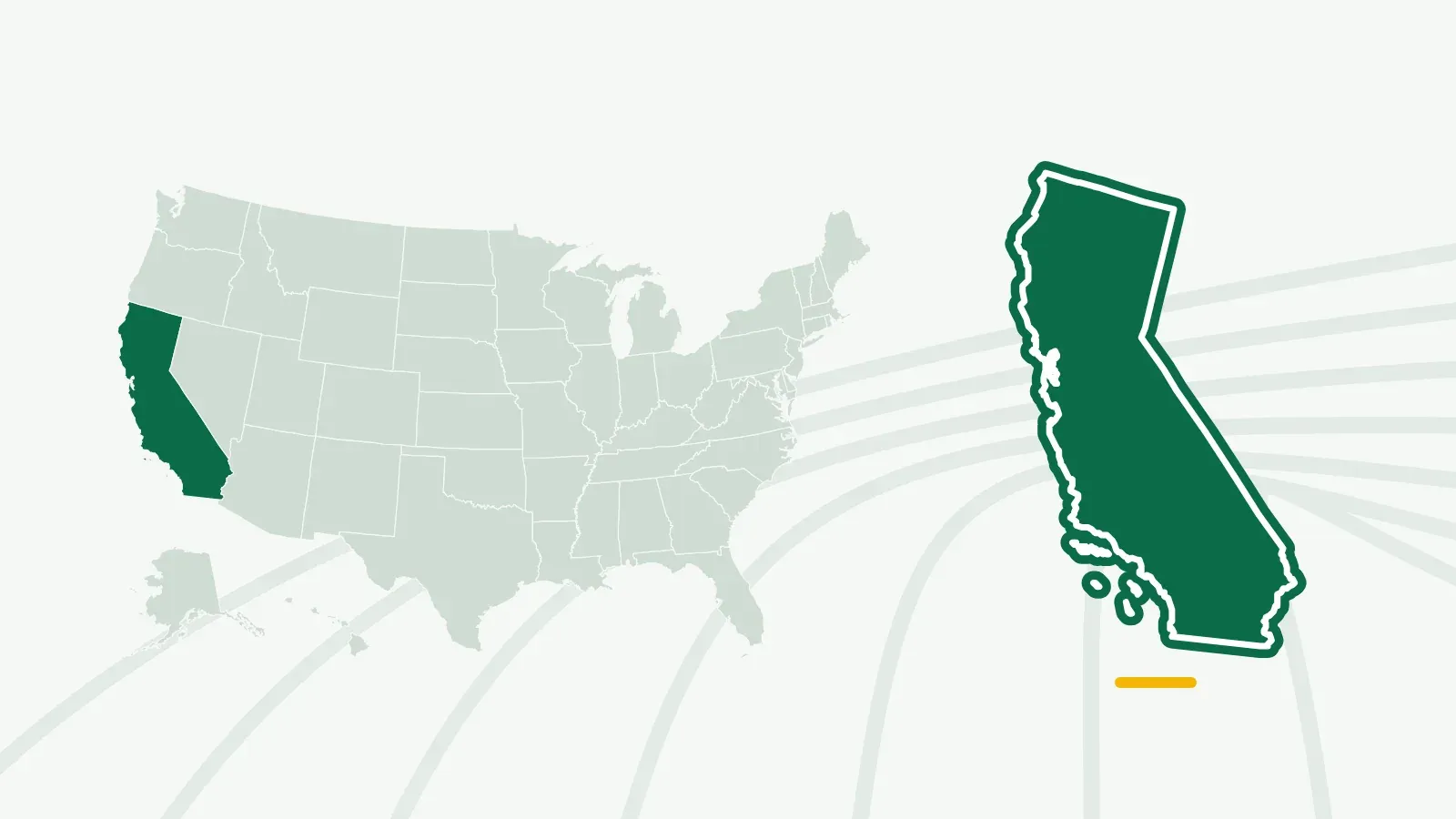
Since January 1, 2025, California drivers need at least $30,000 of bodily injury coverage per person and $60,000 per accident, plus $15,000 for property damage, double the old 15/30/5 floor. Fines for driving uninsured start at $100 to $200 plus penalty assessments, and a crash without coverage can suspend your license for up to four years.
From 15/30/5 to 30/60/15
California had kept the same liability floor for decades until a 2022 law, Senate Bill 1107, doubled it. Policies written or renewed from January 1, 2025 must carry the new amounts. The state is fault-based, so these limits are what you have available to pay people you injure and property you damage.
| Injury or death, one person | $30,000 (was $15,000) |
|---|---|
| Injury or death, more than one person | $60,000 (was $30,000) |
| Property damage | $15,000 (was $5,000) |
| Collision, comprehensive or UM | Not required by law |
Insurers must offer uninsured motorist coverage, and you need to sign a waiver to leave it off. Given how many cars on California roads lack coverage, read about UM/UIM protection before you sign.
Proof, reporting and the DMV
Keep evidence of insurance in the vehicle whenever you drive. You'll need it when an officer asks, when you renew your registration and after any collision, and a card displayed on your phone is accepted. Insurers also report coverage to the DMV, which can suspend a vehicle's registration when it has no proof on file. You can usually clear that by submitting proof online. Until it is cleared, the car can't legally be driven on public roads.
What happens if you drive uninsured
- First conviction: a fine of $100 to $200, plus state and county penalty assessments that multiply the bill.
- Another conviction within three years: $200 to $500, plus assessments. Your vehicle may also be impounded.
- A crash without coverage, whoever caused it: a license suspension of at least one year and up to four years.
- To drive again during the last three years of that suspension, you file an SR-22 and keep it in force for those three years.
There is a civil cost too. Under Proposition 213, an uninsured driver who is hurt by someone else generally can't collect for pain, suffering or other non-economic losses, even when the other driver was entirely at fault. Medical bills and lost wages can still be claimed.
Help if cost keeps you from buying coverage
The Department of Insurance oversees a low-cost program known as CLCA. It sells a liability-only policy for income-eligible drivers that meets the state's financial responsibility law.
- Household income can't exceed 250% of the federal poverty level.
- The car can't be worth more than $25,000 when you apply.
- The policy runs one year at a time and can't be used for rideshare or other commercial driving.
Every insurer must also offer a Good Driver rate at least 20% below its standard rate if you've been licensed three years in a row and have no more than one point on your record. See our list of car insurance discounts for more.
What California drivers pay
The statewide average for a minimum policy in 2026 was about $1,019 a year, and full coverage averaged about $3,444 a year. Under California's rating rules, your driving record, annual mileage and years of driving experience weigh most heavily, followed by factors such as where you live and the car you choose.
Wildfire, smoke damage, catalytic converter theft and break-ins are handled by comprehensive, not liability. If your car is financed or would be hard to replace, price comprehensive and collision together. In fire-prone counties, keep comprehensive even on a second car you rarely drive, and keep photos of the vehicle and any upgrades so a total-loss claim moves faster.
Common questions
Is my old 15/30/5 policy still legal in California?
No. Every policy issued or renewed since January 1, 2025 has to meet 30/60/15. If yours renewed after that date, your insurer should have raised the limits.
Do I have to report a fender bender to the DMV?
Only if anyone was hurt or killed or damage topped $1,000. Then each driver files an SR 1 within 10 days, regardless of fault.
Can I skip uninsured motorist coverage in California?
Yes, but only by signing a written waiver. Without it, an injury caused by an uninsured driver may fall on your own health insurance and savings.
Who qualifies for California's low-cost auto program?
Drivers whose household income is at or below 250% of the federal poverty level and whose car is worth $25,000 or less, among other rules.
Sources
- California Department of Insurance — Auto insurance consumer guide
- California DMV — Financial responsibility, insurance requirements and collisions
- California Vehicle Code § 16029 (fines for no proof of insurance)
- CarInsurance.com — Average car insurance rates by state (2026)
Facts on this page were checked against these sources on October 12, 2026. CLCA eligibility figures come from the Department of Insurance's 2026 report on the program; call the program to confirm your eligibility.
Keep reading
-
Coverage
Uninsured motorist coverage
Pays your injury costs when an uninsured, underinsured or hit-and-run driver is at fault. Required in many states.
-
Guide
Car insurance discounts
Safe-driver, student, safety, bundle and low-mileage discounts, plus policy changes that lower cost.
-
State
Arizona
25/50/15 liability, insurers report to MVD, $500-$1,000 penalties and suspensions for uninsured driving.